Mid-2000s… remember when “checking in” was a thing? You’d walk into a coffee shop or bar or sandwich place, pull out your phone and tell an app where you were. It became a game for a lot of people—I worked with a few people who became “mayors” of certain watering holes they frequented. Foursquare was the one most of us used.
I can’t remember the last time I did it. Somewhere along the line I just stopped, and I never really noticed.
Foursquare didn’t vanish, though. It pivoted (Ross: “Pivot!”) and changed what it sells—this time, it became “foot traffic intelligence.” By 2018, its leadership was describing it as an enterprise business rather than a consumer one. In September 2026, Infillion announced it would acquire the company and keep Foursquare running as an independent brand.
It all reminded me of a gig I did for another company that many of us used all the time.
Remember Houzz?
In 2017 I was booked to photograph the common areas of the Houzz San Diego office. Their corporate enclave sat just north of Petco Park in the Diamond View tower, and the outdoor deck had a spectacular view of the ballpark. Inside, it was the classic dotcom space you’d probably imagine: fancy espresso machines, wall-mounted TVs looping Houzz content, and a huge employee lunch area lined with an entire wall of glass-front commercial refrigerators.
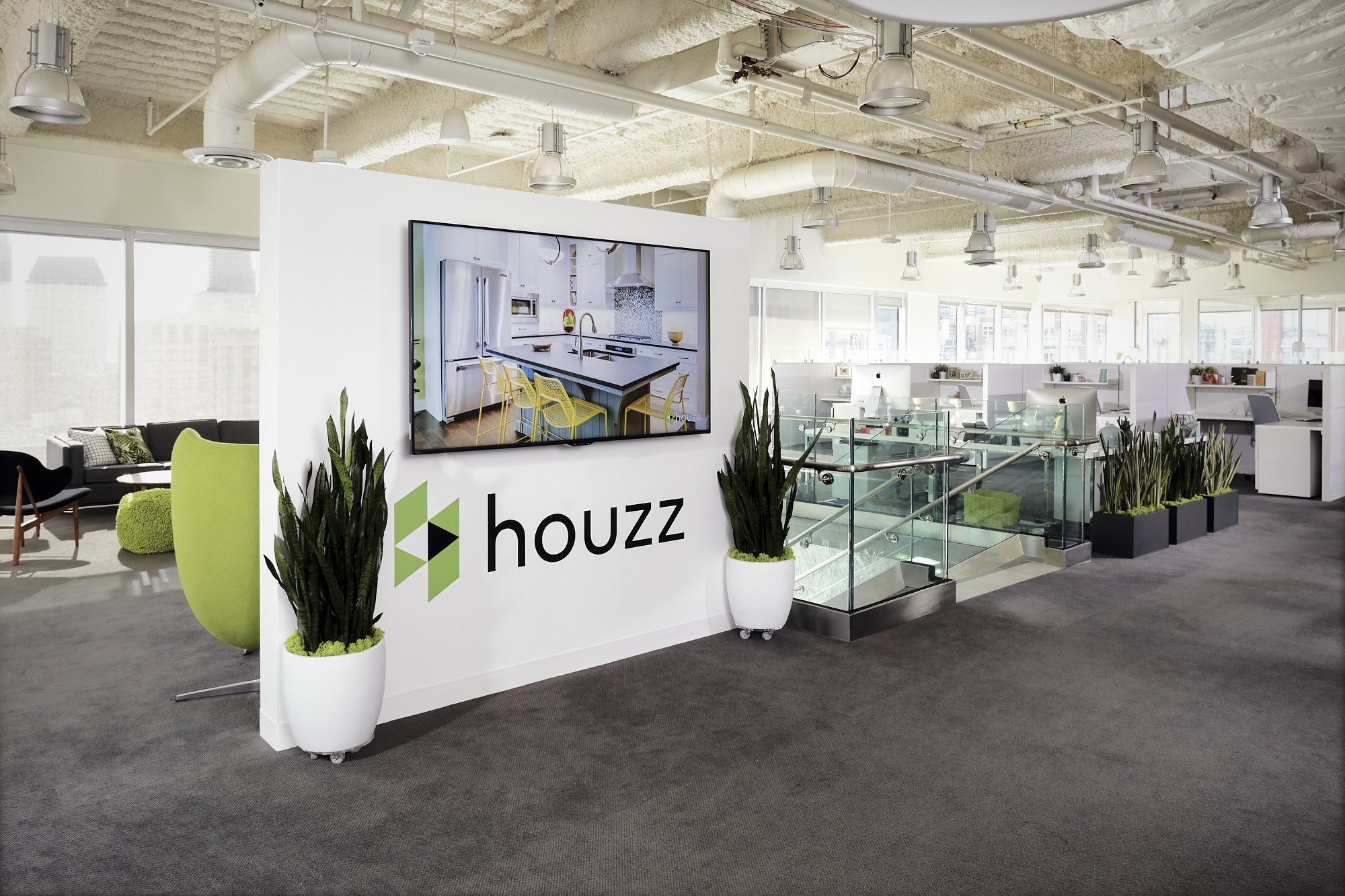
Houzz San Diego HQ, circa 2017
At the time, Houzz felt like a big deal. If you worked in interior design, architecture, landscaping or remodeling, it seemed to be everywhere. The easiest way to describe it was “Pinterest for everything house, home and garden.” Homeowners saved photos into ideabooks. Professionals built profiles, posted projects and collected reviews. I was one of those professionals. I used my Houzz profile (and the reviews) to borrow credibility from a large, trusted brand, and I… never paid for anything.
My profile [still online, but I can’t access it] lists Best of Houzz 2016 for Design Photography and Best of Houzz 2017 for Service, along with 12 projects and more than 1,000 ideabook images saved (my photographs saved and used by Houzz users). For a working photographer, that was really cool validation. I also collected some cute little graphic badges for my website and email signature. So I had that going for me.
But along the line, I stopped thinking about Houzz. That’s just my recollection, not some analytic metric. The brand that seemed to be everywhere, just… stopped showing up in my feed. So I put on my dotcom detective hat and went looking.
What I found
Houzz is not dead (it just smells funny?). It is now a private company that still publishes surveys and trend reports and still runs a professional directory. What changed is the company’s emphasis.
Here is the timeline as best I can piece it together (insert “Always Sunny” conspiracy meme).
In January 2019, Houzz laid off about 180 people, roughly 10% of its staff, amid reports it was preparing for a public listing. I found a mention of the company hiring Goldman Sachs for the financial angle, but there’s no sign that an IPO happened.
In April 2020, it laid off 155 people, about 10% of the team (do we sense a theme?). The founders said COVID had hurt its core business, which they described as pro subscriptions.
That same year, Houzz launched Houzz Pro, a software tool for home-remodeling businesses to manage communications, projects and billing.
In December 2022, Houzz reportedly laid off nearly 100 more people across its U.S. and Israeli offices.
Today the company draws a clear line between its two products. They have Houzz, which they describe as a “free resource for finding inspiration and hiring professionals,” and they also market Houzz Pro as a business management and marketing software for the building and remodeling professionals themselves. My old photos sit inside what is now, in large part, a software pitch.

Houzz exterior deck, looking south to Petco Park, 2017
What I don’t know
I can’t tell you why this happened. Disclaimer: I do have some dotcom cred: plenty of time spent in the Bay Area in the late 1990s/early 2000s with consulting and content companies, featuring lots of turmoil and Herman Miller chairs and “rounds of funding,” etc. But it’s still a mystery. The timeline shows layoffs and a pivot, not a cause, and I’m not going to guess. Plenty of companies rethink their business, and Houzz clearly did.
I also can’t tell you how Houzz is doing now. It is privately held, and the headcount and revenue figures I found online conflict with each other.
What I can pass on
When I built my Houzz profile, I wasn’t really relying on a web page or app. I was relying on a brand that many users trusted. The “performance” badges they issued meant something because Houzz was a known name in my corner of the business.
So Houzz, the brand, is still there. It just sells something different now, much like Foursquare does. Here’s the part that stuck with me: If part of your professional credibility hangs on someone else’s platform, remember that they can [and will] change direction, and you will not get a vote in that direction.