In April 2017, I photographed the Village Theater and some other older buildings in Coronado on a Kowa Six, an old Japanese medium-format 6×6cm film camera (a bit like a Hasselblad, but probably 2x the weight!). I came away with three frames I liked. I recently dug them out, and they've been on my mind because of a different theater in downtown San Diego.
Sidenote: is it “theater” or “theatre”? Here’s how I was taught the difference. The building itself is a “theater.” The company of people/actors/musicians/puppeteers inside… the ensemble that can exist in any venue… that’s a “theatre.”
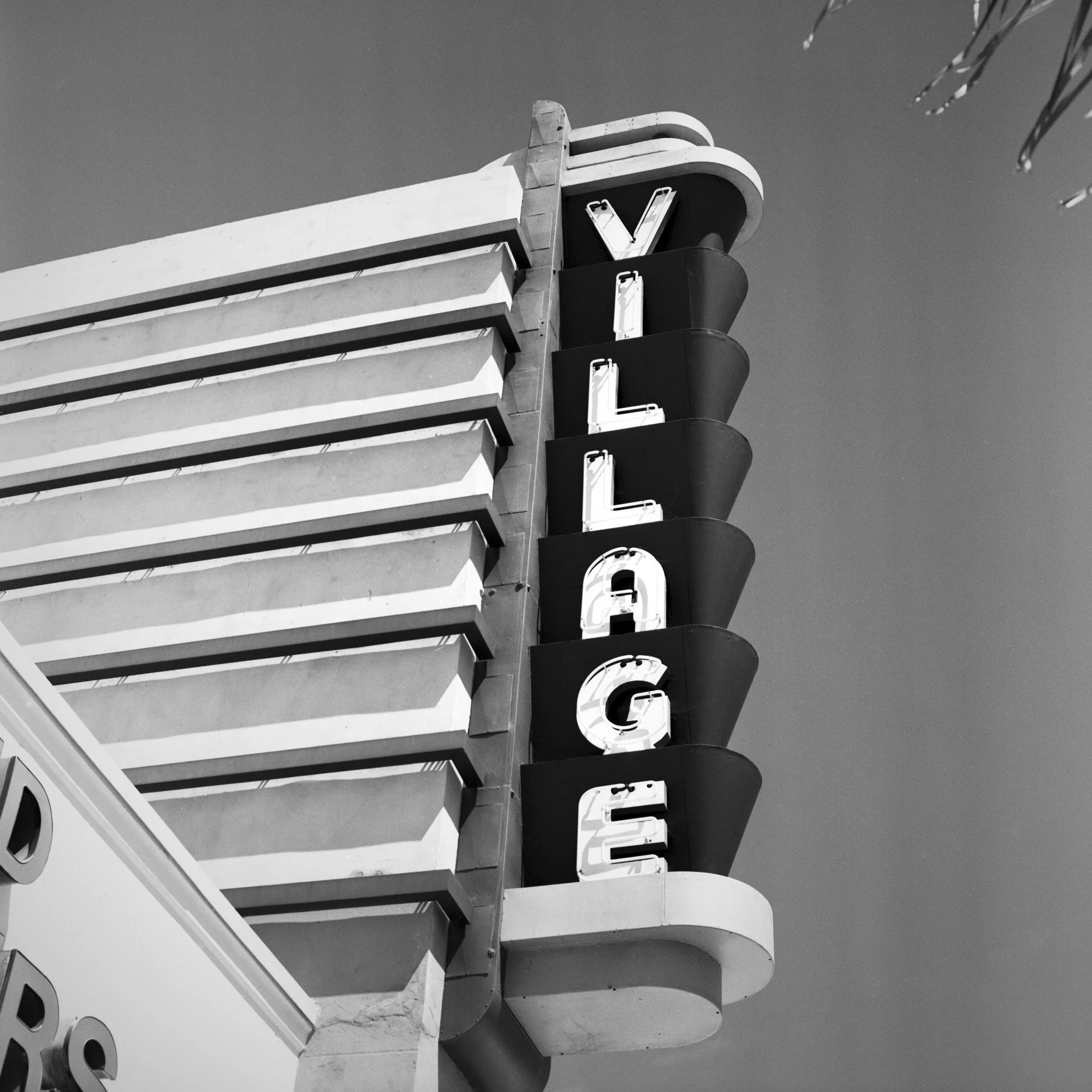
The Village Theater sign, Coronado, California. Kowa Six and Fuji Acros film, April 2017
Start with the sign
The vertical blade sign, the banded façade, and the rounded corners are Streamline Moderne, the later, “abbreviated” phase of Art Deco. The theater opened March 18, 1947. According to the Coronado Historical Association, the first bill was a double feature, Irish Eyes Are Smiling and The Well-Groomed Bride. Local historian Joe Ditler wrote that people lined up for blocks for the first showings.
Then look closer
The entry doors have etched glass with scrolls, a sunburst fan, and bell-shaped buds on stems. The same buds show up in the relief panel beside the doors and, closer still, in my macro (keep scrolling).
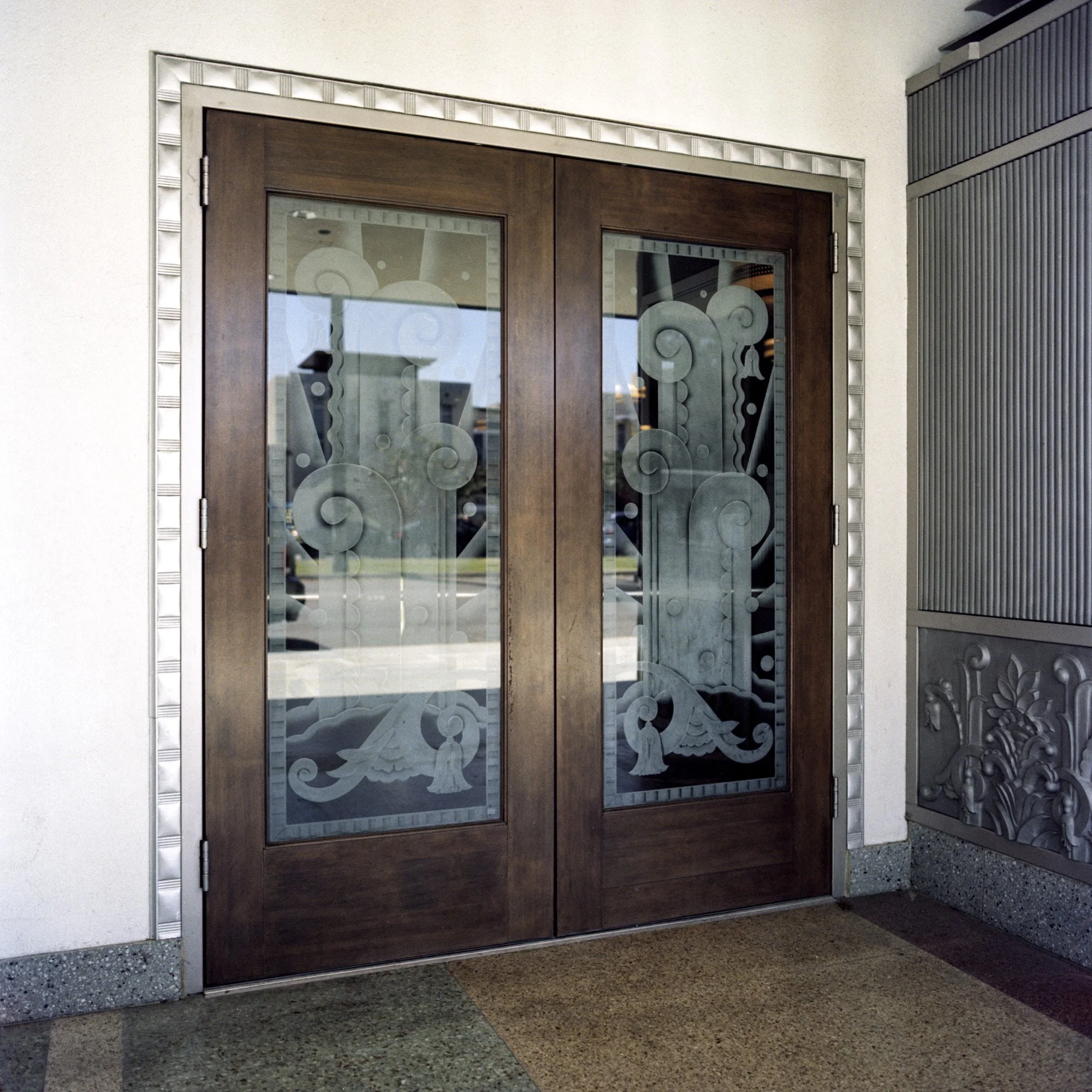
Entry doors, the Village Theater, Coronado, California. Kowa Six and Kodak Portra film, April 2017
Ditler’s account of the 2011 reopening mentions new etched glass doors, so these may be restoration work rather than 1947 originals. I couldn’t tell from being there or from my photographs. I also couldn’t find the answer in any articles about the theater. I guess the line between original and restored is hard to see even when you're standing in front of it.

Cast concrete wall detail, Village Theatre. Kowa Six with macro tubes and Fuji Acros film, April 2017.
What it took to save it
By 2000, the doors were shut, and they stayed that way for a decade. Then the City of Coronado put up about $2.7 million, the 1947 façade got a clean-up/renovation, and the single screening room of roughly 600 seats became three separate screens. It reopened in June 2011 and is open today as an UltraStar cinema.
The one that didn’t get that call — sad trombone sound
The California Theatre opened in 1927 and has been vacant since 1990. In July, the Prebys Foundation agreed to buy it for $6.3 million. On September 29, CBS 8 reported that demolition has begun, with crews clearing the interior and removing hazardous materials first. Exterior demolition is set for early 2027. A Prebys spokesperson called it “condemned.” That’s not the happiest word in the world of historic preservation.
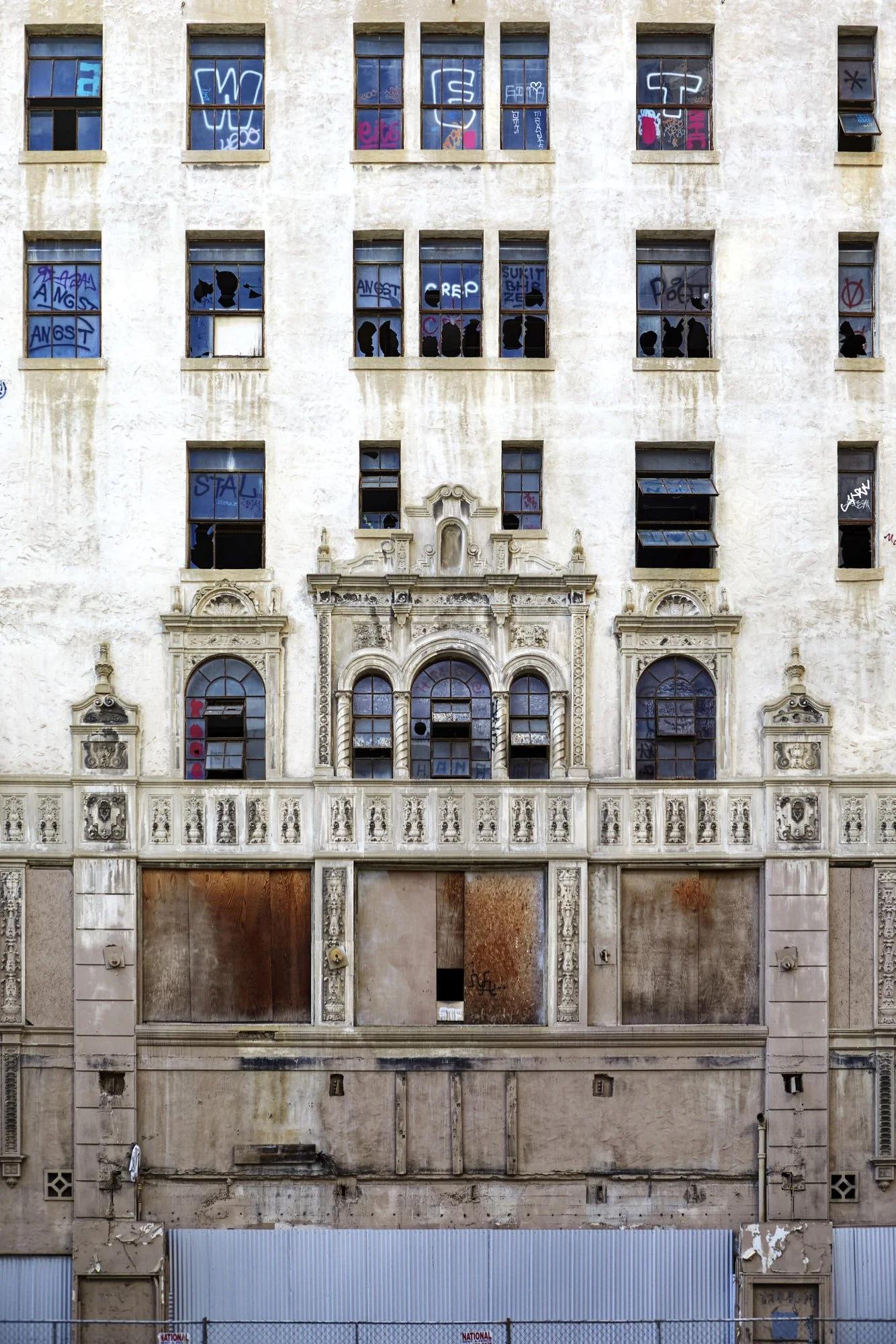
The California Theatre, Fourth Avenue elevation, downtown San Diego, 2023
The Village got a decade of attention and a few million dollars at the right moment. The California got 36 years of waiting and then a wrecking ball.
I photograph buildings for a living and rarely get to do it for myself. These four frames show a theater that was saved, some of the details that tend to go first, and one that wasn’t.
Sources: Joe Ditler, “Coronado's Village Theatre Restored,” SOHO (2011); Coronado Historical Association (June 2020); Times of San Diego (July 21, 2026); CBS 8 (September 29, 2026).