A Day in the Life: Shooting Construction Progress (Part 3—Staying Safe [and Visible] on Site)
Boots are not the place to skimp as a photographer.
I log a whole bunch of steps on a construction shoot. Shoes can be the difference between a comfy, productive shoot and an OSHA incident report (guess how much superintendents enjoy those).
I wear puncture-proof, steel-toe, non-slip boots on every shoot. My current favorites are a pair of Steve Madden side-zipper boots with extra cushioned insoles. I drive to the site in a separate pair of shoes and change once I’m there. It sounds fussy unless you’ve spent four hours driving in steel toes.
A lot of what keeps me safe on an active construction site isn’t some specialized piece of gear. It’s staying aware, constantly, of what’s happening around me.
Equipment operators are focused on their job. The last thing they want is to have to keep an eye on a photographer in their blind spot or keep track of a drone hovering somewhere nearby. My hi-vis vest helps, but it’s not a guarantee. The only thing that actually keeps me safe is operating like nobody sees me, and staying out of vehicle paths and blind spots.
Some hazards are more mundane than a crane or a drone. Ladders, especially the temporary kind fastened to floor joists, are awkward enough to climb without a camera bag on your shoulder. That’s one of the reasons I bring an assistant when I know a shoot involves that kind of access. An extra set of hands, and an extra set of eyes, is worth way more than it costs me.
Then there’s the weather, which in inland and desert parts of Southern California can be its own kind of hazard, not from storms, but from the temperature swing. Concrete pours happen early, so I’m often on-site right at sunrise, and it’s not unusual to find actual frost on the dirt at a job in the high desert or an elevated inland site. By lunchtime the same site can be pushing 70, sunny, and feel even hotter: No shade structures yet, the ground reflecting sun back up at me, humidity close to nothing. A 30-degree swing over the course of a single shoot isn’t rare.
So I dress in layers: a (branded, of course!) t-shirt, a button-up flannel over it, sometimes a hoodie on top of that, hi-vis over all of it, and I shed layers as the day warms up.
Then there’s power. Most job sites let me charge drone and camera batteries in the site trailer, so that’s usually my first option. But weekend shoots, or a sunset shoot after the trailer’s locked up for the day, mean I need a plan B.
That’s where my EV earns its keep. It has a feature called “utility mode.” Once activated, anything plugged into the accessory ports draws from the traction battery. That traction battery is enormous compared to the 12v battery under the hood, and is enough to run accessories for the better part of a week off the grid. I could even power my house with it during a blackout.
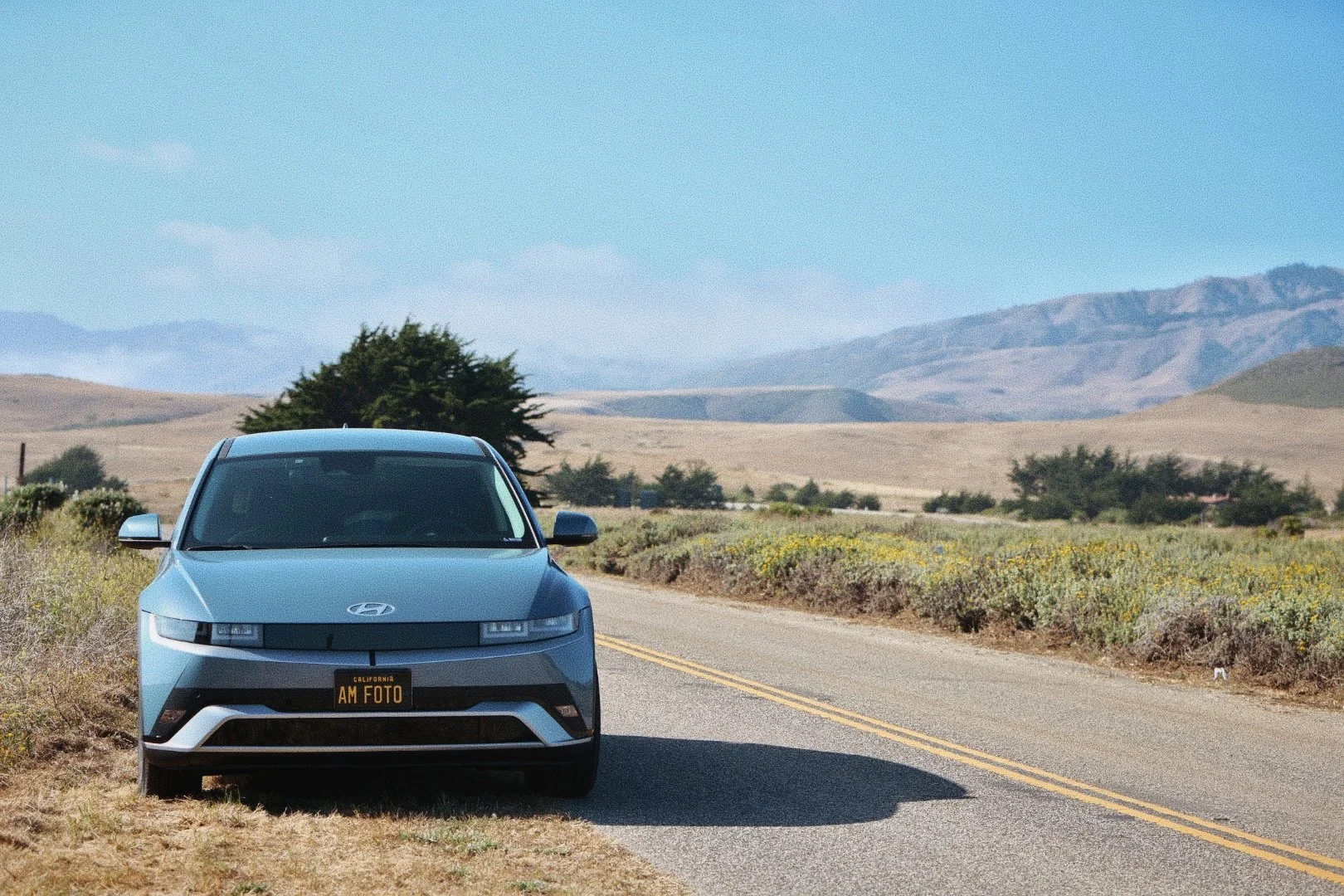
My hoopty.
With a couple of 100-watt fast-charging USB hubs running off it, I can charge roughly three high-capacity drone batteries in about an hour, compared to hours per each battery on a standard wall outlet. On a cold morning, I'll run the heater off the same system, both for me and to keep the batteries themselves warm while they charge. Cold batteries lose capacity and charge more slowly—a warm charge is a faster, more reliable one.
This is not glamorous lifestyle or island life fashion photography. It’s me in my car in a dirt lot with a heater running, charging cables strung across the cargo mat, spilled coffee, and some Jersey Mike’s napkins on the floor. But it means a locked trailer or a weekend shoot never has to mean stopping mid-job.
I don’t mean for any of this to sound dramatic. Most days, nothing goes wrong, the boots do their job, the layers come off as the sun comes up, I get the shots, and nobody thinks twice about it. But the days it matters, it matters a lot, and the preparation is the same either way.
That's the whole job, really. Plan for the shoot I want and prepare for the jobsite I actually get.